
Referentials are not workplaces: which records belong in the warehouse
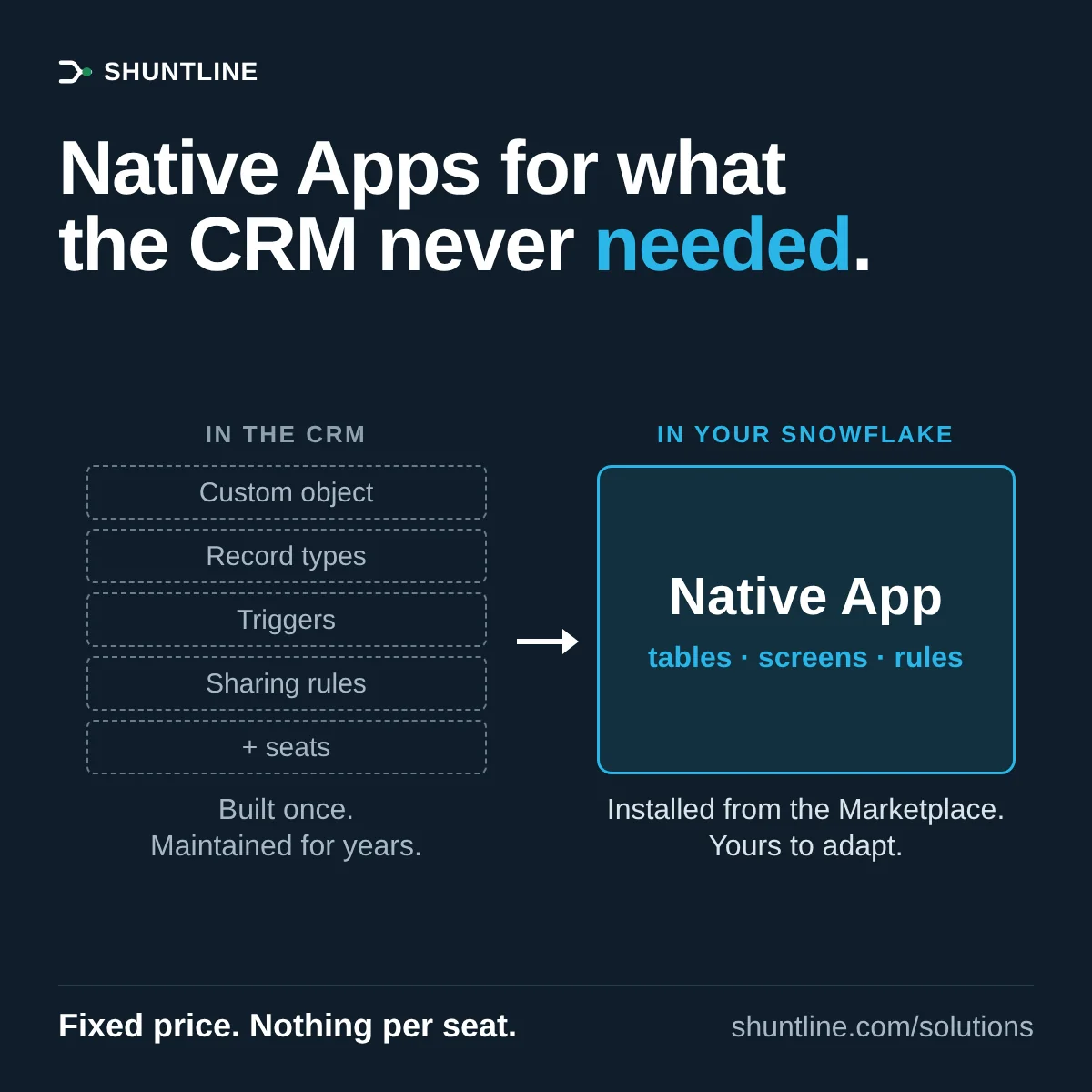
Nobody should move a CRM to a data warehouse. A CRM is a very good workplace: sellers and service agents work an account, a case or an opportunity together, with history and accountability. The question is narrower. Which records in the CRM are not work at all?
referential /ˌrefəˈrenʃəl/ · noun Shared reference data that many teams read and few people work in.
Three tests
1. Is it shared across the company?
Every brand, country and partner feeds the same list and reads the same answer. In a CRM, that takes record types, sharing rules and often a copy per team. Next to the warehouse it is one governed dataset.
2. Is it worked by automation?
Few people open these records. Their life is receive, check, file, hand off. A seat, a page layout and an assignment rule are a high price for a job nobody sits in front of.
3. Is it read far more than written?
The context these records need, such as ERP status, usage, history and attribution, is already in the warehouse. Reading it in place removes the inbound sync and the integration per sender.
A record that passes all three is a referential. It was stored in the CRM because, years ago, nothing else was ready to hold it.
Three examples
- Leads. Hundreds of senders, any shape, filed by rules, and a fraction worth a seller's time. Lead management passes every test.
- Consent. Every audience query must read it and almost nobody edits it by hand. A consent register is the textbook referential.
- The campaign catalogue. Every business unit references it and the marketing platforms execute it. One catalogue, one naming, one set of codes.
Then come the objects each org added over the years: partner lists, product and pricing catalogues, event registrations, service entitlements. Every industry has its own.
What stays
Accounts, contacts, opportunities, cases, activities: anything a person works on with a customer. These are the workplace, and the CRM is the right tool for them. The aim is a CRM sized to engagement.
How to apply the tests
With numbers, per object: how many people write to it, how many only read, how much automation runs on it, how many systems feed it. An audit of the org gives those counts. The list of candidates is usually short and clear, and moving them is done one at a time.
Next: Measuring CRM bloat: what a Salesforce audit should count →